Saving water and rejuvinating soil in rice-wheat cropping sequence: GS Fred Model
The Issue
Ever since the green revolution of 1960’s, rice-wheat cropping rotation became highly popular with the farmers of north-west India. These crops made country self sufficient in food grains production and exports increased over the years. During last five decades, the eco-friendly crops of the region like cotton, maize, millets, pulses and oilseeds etc. were replaced with rice and wheat. At present, nearly 90% area in Punjab and Haryana is occupied by this cereal rotation. Continuous cultivation of rice and wheat over long period resulted in drawdown of ground water, deterioration in soil health, loss of biodiversity, issues of environmental concern associated with large scale burning of residues of these crops. Lot of emphasis by the centre and state governments and research and policy experts to diversity from rice-wheat to maize, soybean, cotton, pulses, oilseeds, vegetables and fruits did not succeed. Rice-wheat cropping sequence is the first choice with the farmers even today.
GSFRED INITIATIVE
After the establishment of GS Foundation for Research, Education and Development (GSFRED) near Karnal in 2017, several experiments and demonstrations were laid-out focusing on the concept of making rice-wheat system sustainable and eco-friendly. Three years results clearly indicated that desired reduction in water use, improvement in soil health, regeneration of biodiversity and in-situ use of crop residues is possible through agronomic manipulations.
The innovative Technology package developed at the centre is summarized below:
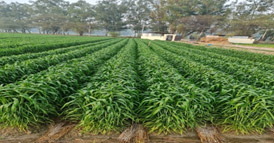
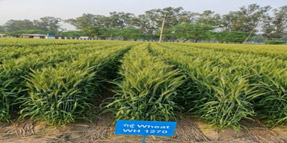
Growth of wheat crop on raised bunds and furrows filled with rice residue.